Natural vs Synthetic Wedding Dress Fabrics
by Admin
November 8, 2026
2 Min Read
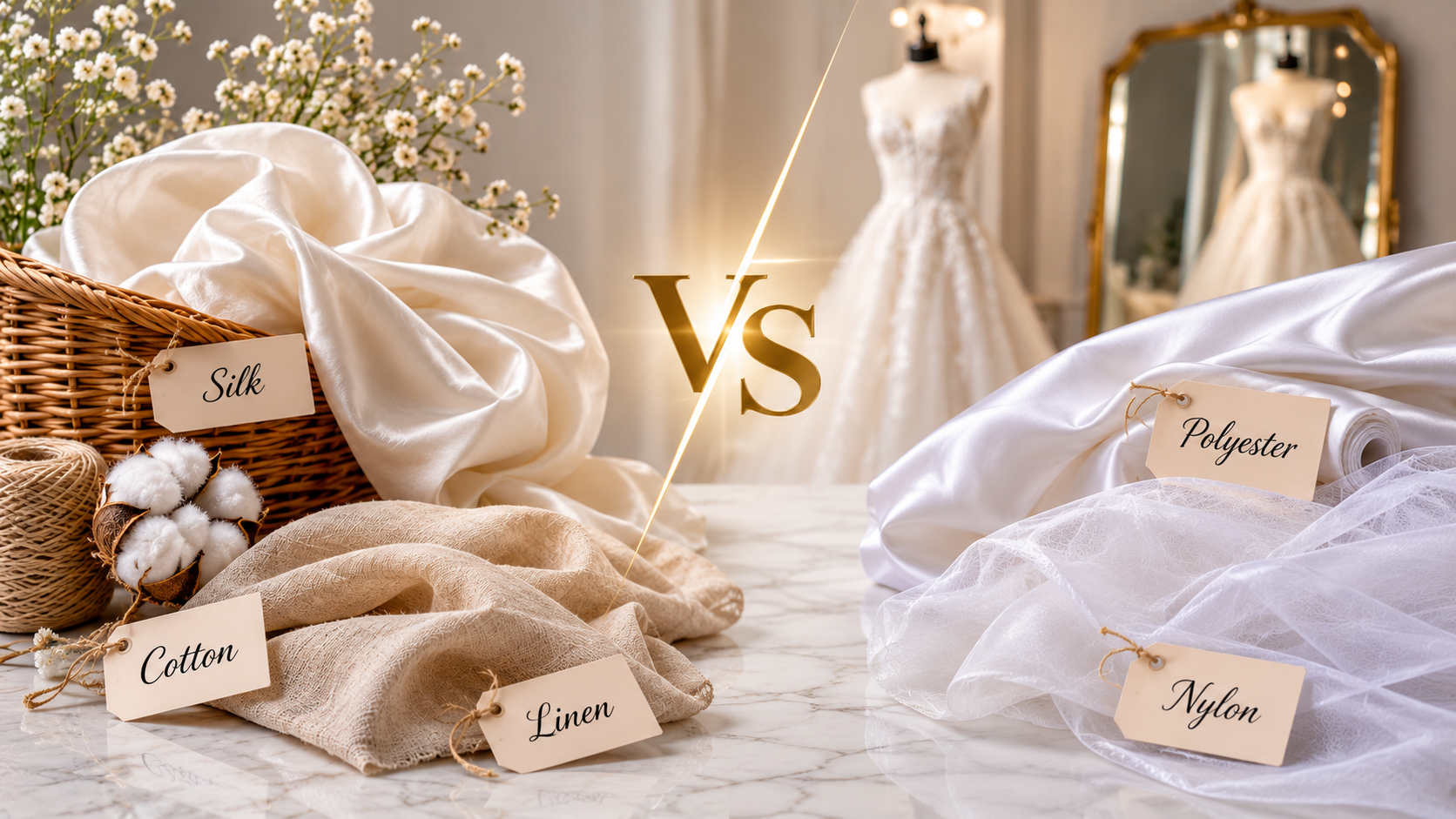
Choosing the right fabric is an important part of finding the perfect wedding dress. Beyond the design and silhouette, the material affects how a gown looks, feels and moves. One of the most common decisions brides face is whether to choose natural or synthetic wedding dress fabrics.
Natural materials, such as silk and cotton, are valued for their distinctive textures and fibre properties. Synthetic materials, including polyester and nylon, offer different advantages, such as versatility, durability and a wider range of price options.
Understanding the differences between these materials can help you make a more informed decision. In this guide, we explore natural and synthetic wedding dress fabrics, their features, benefits and drawbacks, and how to choose the right option for your bridal style.
What Are Natural Wedding Dress Fabrics?
Natural fabrics are made from fibres obtained from plants or animals. They have been used in clothing for centuries and remain popular in bridal fashion because of their varied textures, appearance and feel.
Some natural fabrics are particularly valued for their softness and elegant drape, making them suitable for both traditional and contemporary wedding dresses.
Popular Types of Natural Fabrics
1. Silk
Silk is one of the most luxurious natural fibres used in bridal fashion. It is known for its soft texture, natural lustre and elegant drape.
Key features include:
- Smooth and comfortable feel.
- Natural sheen.
- Elegant movement and draping.
- Available in different weaves and weights.
Silk is suitable for minimalist gowns, flowing dresses and sophisticated bridal designs. However, it can be expensive and may require specialist cleaning.
2. Cotton
Cotton is a natural plant-based fibre known for its breathability and softness. Although it is less common in traditional formal wedding gowns, it can be used in lightweight bridal designs and dresses with a relaxed appearance.
Key features include:
- Soft and breathable texture.
- Comfortable feel against the skin.
- Available in different weights and finishes.
- Relatively easy everyday fabric care, depending on construction.
Cotton may be suitable for brides who prefer a simple and comfortable wedding dress. However, it generally offers less natural sheen than silk or satin.
3. Linen
Linen is another natural plant-based fabric made from flax fibres. It has a distinctive texture and relaxed appearance.
Key features include:
- Lightweight and breathable construction.
- Natural textured finish.
- Comfortable feel in warmer conditions.
- A relaxed and understated appearance.
Linen is not a traditional choice for highly structured wedding gowns, but it can work beautifully in simple and contemporary bridal designs. It also tends to crease more easily than many other materials.
What Are Synthetic Wedding Dress Fabrics?
Synthetic fabrics are manufactured using chemical processes, often from polymer-based fibres. They are widely used in modern clothing and bridal fashion because they can be produced in different textures, weights and finishes.
Synthetic materials can also imitate the appearance of natural fabrics, providing more affordable alternatives for certain wedding dress designs.
Popular Types of Synthetic Fabrics
1. Polyester
Polyester is one of the most widely used synthetic fibres in wedding dress production. It can be woven into different fabrics, including satin, chiffon and organza.
Key features include:
- Generally resistant to shrinking.
- Good shape retention.
- Available in different textures and finishes.
- Often more affordable than natural silk.
Polyester is a versatile option for brides looking for different styles at various price points. Its breathability and feel depend on the fabric construction and quality.
2. Nylon
Nylon is a lightweight synthetic fibre often used in delicate and decorative bridal materials.
Key features include:
- Lightweight construction.
- Good flexibility in suitable fabric blends.
- Useful for sheer and decorative materials.
- Can provide strength and durability.
Nylon may be used in tulle, lace and other lightweight bridal fabrics. It is particularly useful when designers want to create delicate layers without adding excessive weight.
3. Acrylic and Other Synthetic Blends
Some bridal fabrics use acrylic or blended synthetic fibres to achieve particular textures, finishes and performance characteristics.
The properties depend on the exact composition and construction. Blended fabrics can combine different characteristics to create materials suitable for specific wedding dress designs.
Natural vs Synthetic Wedding Dress Fabrics: Main Differences
Although both categories offer many options, there are several differences worth considering before choosing your wedding dress.
1. Comfort and Breathability
Natural fibres such as cotton and certain silk fabrics are often valued for their comfortable feel. However, comfort also depends on fabric weight, weave, lining and garment construction.
Synthetic materials vary considerably. Some polyester fabrics can feel less breathable, while lightweight synthetic chiffon and other well-constructed materials can be comfortable to wear.
If you plan to wear your wedding dress for several hours, consider how the material feels against your skin and whether it allows enough movement.
2. Appearance and Texture
Natural fabrics often have distinctive textures and finishes. Silk, for example, can have a subtle natural lustre, while linen has a more textured appearance.
Synthetic fabrics can be manufactured to achieve a wide variety of finishes. Polyester satin can create a smooth, glossy appearance, while synthetic chiffon offers a soft and flowing look.
The final appearance depends on the specific fabric rather than simply whether it is natural or synthetic.
3. Durability
Durability varies between different fibres and fabric constructions.
Polyester is generally known for its resistance to shrinking and ability to retain its shape. Silk can be strong for its weight but may be vulnerable to abrasion, perspiration and unsuitable cleaning methods.
Natural fabrics should not automatically be considered less durable, just as synthetic materials should not automatically be considered more durable. The quality and construction of the garment are equally important.
4. Price and Affordability
Natural fabrics such as silk can be more expensive because of their production processes and material costs.
Synthetic fabrics, particularly polyester, often provide more affordable alternatives. This makes them popular in wedding dresses available across different budgets.
However, the final price also depends on the design, craftsmanship, embellishments and overall quality of the dress.
5. Maintenance and Care
Different fabrics have different cleaning and storage requirements.
Some synthetic fabrics are relatively easy to maintain, while delicate natural materials may require more specialised care.
Before purchasing a wedding dress, check the care label and consider how you will store and clean the garment after the event.
Natural vs Synthetic Fabrics: Comparison Table
The following table provides a quick overview of the main differences.
| Feature | Natural Fabrics | Synthetic Fabrics |
|---|---|---|
| Source | Plant or animal fibres | Manufactured fibres |
| Texture | Varies by natural fibre | Can be produced in many textures |
| Breathability | Often good, depending on fibre | Varies by composition and construction |
| Durability | Depends on fibre and weave | Often offers good shape retention |
| Price | Can be more expensive | Often more affordable |
| Maintenance | May require specialist care | Depends on material |
| Appearance | Distinctive natural textures | Wide range of finishes |
Which Fabric Is Better for Your Wedding Dress?
There is no single answer because the best fabric depends on your preferred style, comfort requirements and budget.
Choose Natural Fabrics If You Prefer:
- Natural fibres and distinctive textures.
- The soft feel of certain silk and cotton fabrics.
- A traditional or understated appearance.
- Materials with natural characteristics.
- A fabric that suits your preferred design and budget.
Choose Synthetic Fabrics If You Prefer:
- A wider range of price options.
- Different textures and finishes.
- Materials that can offer good shape retention.
- Versatile designs and decorative possibilities.
- Certain fabrics that are easier to maintain.
You can also consider blended fabrics, which combine natural and synthetic fibres to achieve a balance of different characteristics.
How to Choose the Right Wedding Dress Material
Before making a purchase, consider these practical factors:
1. Your preferred wedding dress style
A structured gown may benefit from a fabric with more body, while a flowing dress may look better in chiffon or another lightweight material.
2. Comfort throughout the day
Think about how the dress feels when walking, sitting and dancing. The lining, weight and fit can make a significant difference.
3. Your budget
Compare the complete wedding dress rather than focusing only on the fibre type. Construction, design and finishing all contribute to its value.
4. Fabric quality
Examine the texture, stitching, seams and lining. A high-quality synthetic fabric may be a better option than a poorly made natural fabric.
5. Cleaning and storage
Consider how much maintenance the material requires and whether you can follow its care instructions.
6. The wedding season
Lightweight fabrics may be more comfortable in warmer conditions, while heavier materials and additional layers can be suitable for cooler weather.
Wedding Dress Fabric Care and Alterations
Regardless of whether your wedding dress is made from natural or synthetic fibres, proper care is essential for maintaining its appearance.
Different fabrics may require different cleaning methods. Silk, for example, can be sensitive to certain cleaning products, while synthetic fabrics may be affected by excessive heat.
Here are some useful care tips:
- Always check the manufacturer’s care instructions.
- Store the dress in a suitable garment bag.
- Keep delicate fabrics away from sharp objects.
- Avoid exposing the material to excessive heat.
- Handle embroidery, lace and decorative details carefully.
- Seek professional help if the dress becomes damaged.
Wedding dresses may also require alterations to achieve the right fit. Common adjustments include shortening the hem, adjusting the waist, modifying the sleeves and repairing loose seams.
If your wedding dress or another garment needs repair or alteration, MK West Tailor offers services for different types of clothing in Milton Keynes. Visit the website to explore its services and enquire about your specific requirements.
For delicate materials, professional handling is recommended to help preserve the fabric and the overall appearance of the garment.
Find Your Ideal Wedding Dress at Tip Top Prom Dress
Natural and synthetic wedding dress fabrics both offer a variety of advantages. Natural materials such as silk and cotton provide distinctive textures, while synthetic options such as polyester and nylon offer versatility and different price points.
The right choice depends on your personal style, comfort, budget and the overall design you have in mind.
If you are ready to find your perfect bridal look, visit the Tip Top Prom Dress store to browse the available collection and explore different wedding dress styles.
Compare the fabric descriptions, designs and garment details before making your decision. Taking the time to understand the material can help you choose a wedding dress that looks beautiful and feels comfortable on your special day.