How to Care for and Repair Delicate Wedding Dress Fabrics
by Admin
November 12, 2026
2 Min Read
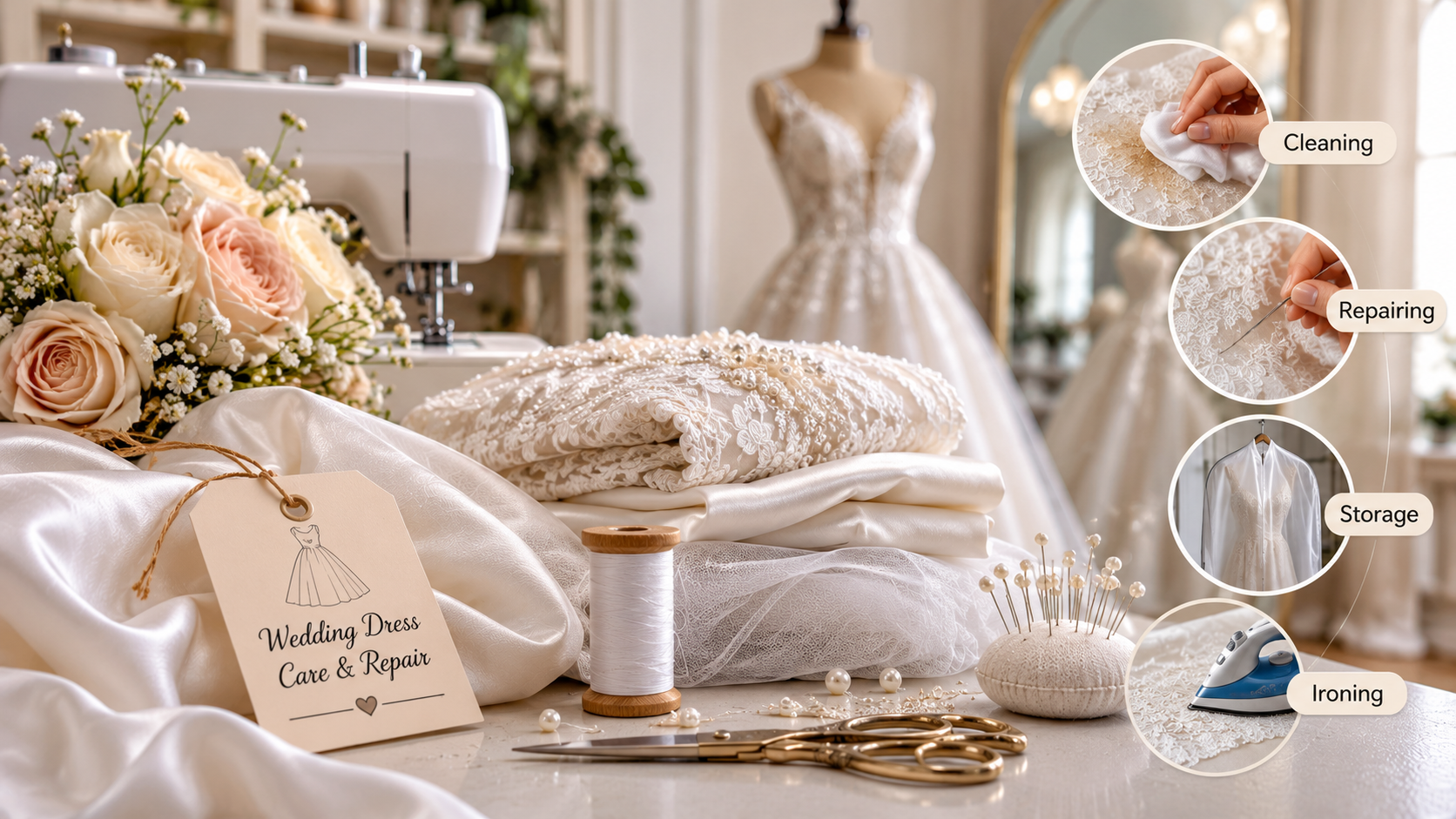
Wedding dresses are often made from delicate fabrics that require special attention to maintain their beauty, shape and quality. Materials such as silk, satin, lace, chiffon, tulle and organza can be easily damaged if they are washed, stored or handled incorrectly.
Whether you are preparing for your wedding day or looking after your dress afterwards, understanding how to care for delicate wedding dress fabrics can help prevent unnecessary damage and keep your dress looking beautiful for years.
In this guide, we explore practical cleaning methods, storage advice and repair tips for some of the most popular wedding dress fabrics.
1. Understanding Different Delicate Wedding Dress Fabrics
Before cleaning or repairing a wedding dress, it is important to understand the material. Each fabric has different properties and requires a suitable care routine.
| Fabric | Common characteristics | Main care concern |
|---|---|---|
| Silk | Soft, smooth and luxurious | Water marks and heat damage |
| Satin | Smooth surface with a subtle shine | Snags, creases and stains |
| Lace | Decorative and often intricate | Pulls, tears and loose threads |
| Chiffon | Lightweight and flowing | Snagging and fraying |
| Tulle | Fine net-like structure | Tears and stretching |
| Organza | Lightweight with a crisp finish | Creasing and fabric distortion |
Always check the garment’s care label before attempting to clean it. Some wedding dresses also contain multiple layers, linings, embellishments or decorative details that require professional treatment.
2. How to Clean Delicate Wedding Dress Fabrics
Cleaning a wedding dress requires patience and the right approach. Using ordinary washing methods can cause shrinking, colour changes or damage to delicate fibres.
Cleaning Silk Wedding Dresses
Silk is a natural fibre that can be sensitive to water, detergents and heat.
- Avoid putting silk wedding dresses in a washing machine.
- Do not rub stains, as this may damage the fibres.
- Keep the fabric away from direct sunlight for extended periods.
- Use a professional cleaner experienced in handling silk garments.
For valuable silk dresses, professional cleaning is generally the safest option.
Cleaning Satin Wedding Dresses
Satin can develop water marks and lose its smooth appearance if handled incorrectly.
- Avoid scrubbing the surface.
- Use a clean, soft cloth to gently blot minor spills.
- Never apply strong household cleaning products.
- Store the dress in a breathable garment bag.
The correct cleaning method depends on whether the satin is made from silk, polyester or another fibre.
Cleaning Lace Wedding Dresses
Lace often contains delicate patterns, fine threads and intricate details.
- Avoid pulling loose threads.
- Do not use rough brushes or abrasive materials.
- Keep lace away from jewellery and accessories that could catch on it.
- Allow a professional cleaner to handle heavily stained or embellished lace.
Cleaning Chiffon, Tulle and Organza
These lightweight fabrics can easily snag, stretch or lose their shape.
- Handle them with clean, dry hands.
- Avoid twisting or wringing the fabric.
- Do not hang heavy garments from delicate sections.
- Follow the care label and seek professional cleaning when necessary.
3. How to Remove Common Wedding Dress Stains
Wedding dresses can collect stains from makeup, food, drinks, perfume and outdoor surfaces.
The most important rule is to avoid aggressive stain removal techniques. Rubbing, bleaching or applying random cleaning products can make the damage worse.
Here are some general precautions:
Makeup stains: Avoid rubbing the affected area. Cosmetic products can spread further into delicate fibres.
Food stains: Carefully remove any solid residue without scraping the fabric.
Drink stains: Gently blot excess liquid with a clean, absorbent cloth. Do not press too hard.
Grass and outdoor stains: Avoid household bleach or strong stain removers, particularly on coloured or delicate materials.
Perfume marks: Allow the area to dry naturally and avoid applying additional products.
For valuable wedding dresses, persistent stains or unknown fabric compositions, professional cleaning is recommended.
4. Common Wedding Dress Fabric Repairs
Even with careful handling, delicate wedding dresses can develop small tears, loose threads or damaged seams. Identifying these problems early can prevent more serious damage.
Repairing Torn Lace
Lace can tear when it catches on jewellery, accessories or rough surfaces.
Small areas of damage may sometimes be repaired using fine matching thread and careful stitching. However, patterned lace often requires specialist attention to preserve its original design.
Fixing Loose Threads and Seams
Loose threads can appear around seams, sleeves, waistlines and decorative sections.
- Avoid pulling loose threads.
- Check whether the seam has opened or only a thread has become loose.
- Use matching thread for suitable minor repairs.
- Seek professional assistance if the damaged area supports the structure of the dress.
Repairing Chiffon and Tulle
Small holes in chiffon and tulle can become larger if the fabric is stretched or handled roughly.
Depending on the location and size of the damage, a tailor may use fine stitching, discreet patches or replacement fabric to restore the appearance.
Fixing Satin and Silk Damage
Satin and silk require particular care because repairs can be visible on their smooth surfaces.
A repair should match the original fabric’s colour, texture and finish as closely as possible. For noticeable tears, professional alteration is usually preferable to attempting a home repair.
5. How to Store a Wedding Dress Properly
Correct storage helps protect delicate fabrics from dust, moisture, sunlight and accidental damage.
Follow these practical tips:
- Clean the dress before long-term storage: Stains that are not immediately visible can become harder to remove over time.
- Use a breathable garment bag: Avoid storing delicate dresses in ordinary plastic bags for extended periods.
- Choose a cool, dry location: Excessive humidity can encourage mould and unpleasant odours.
- Keep the dress away from direct sunlight: Prolonged exposure can cause fading and discolouration.
- Avoid unnecessary folding: Deep folds can create permanent creases, especially in delicate materials.
- Check the dress occasionally: Inspect it for signs of moisture, fabric deterioration or loose stitching.
For heavier wedding dresses, professional advice on suitable storage and hanging methods can help prevent stress on the shoulders and seams.
6. When Should You Choose Professional Wedding Dress Repair?
Not every problem requires professional assistance, but some types of damage should never be treated as ordinary DIY repairs.
Consider professional help if your dress has:
- Large tears or damaged seams.
- Intricate lace that needs to be restored.
- Loose beads, sequins or decorative details.
- Stubborn stains on silk or satin.
- Damaged zips, buttons or fastenings.
- Changes in fit that require alterations.
A skilled tailor can assess the fabric, identify the safest repair method and help preserve the original appearance of the dress.
If you need clothing repairs or alterations in Milton Keynes, MK West Tailor provides repair services for all types of clothing.
7. Where to Find a Beautiful Wedding Dress
Choosing a wedding dress is about more than its design. Fabric quality, comfort, fit and long-term care should all be considered before making a purchase.
If you are looking for a dress for your special day, explore the Tip Top Prom Dress store to discover available styles and find an option that suits your preferences.
Before purchasing, consider the fabric composition, cleaning requirements and whether the dress may need alterations to achieve the right fit.