How to Choose the Best Fabric for a Wedding Dress
by Admin
October 22, 2026
2 Min Read

Choosing the best fabric for a wedding dress is an important step in finding a gown that looks beautiful, feels comfortable and suits your personal style. The right material influences the dress’s shape, movement, texture and overall appearance. From elegant satin to delicate lace, every fabric offers different qualities that can transform the look of a wedding dress.
In this guide, we explore popular wedding dress fabrics, their benefits and the key factors to consider when choosing the perfect material for your special day.
Why Is Wedding Dress Fabric Important?
The fabric of a wedding dress affects more than its appearance. It also determines how the gown fits, moves and feels throughout the day.
Before choosing a material, consider the following factors:
- Comfort: Select a fabric that feels comfortable against your skin, particularly if you plan to wear the dress for several hours.
- Style: Some materials create a structured silhouette, while others offer a soft, flowing appearance.
- Weight: Lightweight fabrics allow greater movement, whereas heavier materials can provide more structure.
- Texture: Smooth, shiny, embroidered and textured fabrics each create a different visual effect.
- Season: The temperature and conditions of your wedding day can influence which material feels most comfortable.
Understanding these characteristics can help you choose a wedding dress that balances style, practicality and comfort.
Popular Types of Wedding Dress Fabrics
Different wedding dress materials offer unique advantages. Understanding their characteristics makes it easier to decide which fabric best matches your preferred design.
1. Satin
Satin is a popular choice for brides who want a polished, elegant appearance. Its smooth surface and subtle sheen create a luxurious finish that works well with both minimalist and traditional wedding dress designs.
Benefits of satin:
- Creates a smooth and sophisticated appearance.
- Works well with structured bodices and fitted silhouettes.
- Offers a substantial feel in many fabric weights.
- Complements simple designs without requiring extensive embellishment.
Satin can be relatively heavy, depending on its composition and thickness. Consider the weight and lining when choosing a satin wedding dress.
2. Lace
Lace is known for its delicate patterns and romantic appearance. It can be used across an entire gown or incorporated into sleeves, bodices, necklines and decorative overlays.
Benefits of lace:
- Adds intricate detail and visual interest.
- Suits vintage-inspired and romantic styles.
- Can be layered over other materials for added depth.
- Works beautifully with both fitted and flowing designs.
Because lace can be delicate, inspect its stitching and construction carefully. Fine lace may require specialist handling when cleaning, repairing or altering a dress.
3. Chiffon
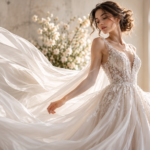
Chiffon is a lightweight fabric that creates a soft, flowing effect. It is particularly suitable for brides who prefer an airy appearance rather than a heavily structured gown.
Benefits of chiffon:
- Provides graceful movement when walking.
- Creates a light and delicate silhouette.
- Works well for layered skirts and flowing designs.
- Can offer a comfortable option for warmer conditions.
Chiffon is often slightly transparent, so wedding dresses made from this fabric may require suitable lining or multiple layers.
4. Tulle
Tulle is a fine, lightweight net fabric commonly used to create volume and dimension. It is frequently found in layered skirts, veils and decorative details.
Benefits of tulle:
- Adds volume without necessarily making a skirt excessively heavy.
- Creates a soft, airy appearance.
- Works well with ball gowns and princess-style dresses.
- Can be layered to achieve different levels of fullness.
Tulle can snag or tear if handled roughly, so careful storage and maintenance are important.
5. Organza
Organza is a lightweight fabric with a crisp finish that helps a wedding dress maintain its shape. It offers more structure than chiffon while retaining a delicate, translucent appearance.
Benefits of organza:
- Creates volume and definition.
- Holds its shape well in layered designs.
- Provides a light and elegant finish.
- Works well for dramatic skirts and decorative overlays.
Although organza can look delicate, its crisp texture may feel less soft than some other wedding dress materials.
6. Crepe
Crepe is recognised for its smooth drape and subtle, slightly textured surface. It is often chosen for modern wedding dresses with clean lines and understated details.
Benefits of crepe:
- Creates a sleek and contemporary silhouette.
- Drapes naturally around the body.
- Works well for fitted and minimalist gowns.
- Offers an elegant alternative to highly glossy materials.
Some crepe fabrics show creases or reveal garment lines more easily, so the dress’s construction and fit should be considered carefully.
How to Choose the Right Wedding Dress Fabric
The best wedding dress fabric depends on your preferences, the design you have in mind and how you want the dress to feel.
Consider Your Wedding Dress Style
Start by identifying the silhouette and overall look you prefer. Structured designs often benefit from materials such as satin or organza, while flowing gowns may work better with chiffon. Lace can add intricate detail, and crepe is a strong option for clean, modern designs.
Think About Comfort and Movement
Your wedding dress should allow you to walk, sit, dance and move comfortably. Heavier fabrics may create a dramatic appearance but can feel restrictive during extended wear. Lightweight materials may provide greater freedom of movement.
Whenever possible, consider the lining, seams and overall construction alongside the outer fabric.
Match the Fabric to the Season
For warmer conditions, lightweight materials such as chiffon may feel more comfortable. For cooler weather, a heavier satin gown or a dress with additional lining may be more suitable.
However, fabric composition and construction matter as much as the material’s name. A lined dress can feel very different from an unlined one made from the same fabric.
Consider Your Budget
Wedding dress prices can vary according to the fabric, construction, embellishments and amount of detail involved.
Natural silk, intricate lace and heavily embellished materials may increase the overall cost. Alternatives made from polyester or blended fibres can offer different price points while achieving a similar visual effect.
Compare the overall quality, finish and comfort rather than choosing a dress based on fabric type alone.
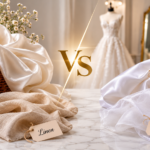
Wedding Dress Fabric Comparison
| Fabric | Appearance | Main advantage |
|---|---|---|
| Satin | Smooth and elegant | Structured, polished finish |
| Lace | Decorative and romantic | Intricate patterns |
| Chiffon | Soft and flowing | Lightweight movement |
| Tulle | Airy and voluminous | Adds fullness |
| Organza | Crisp and delicate | Maintains shape |
| Crepe | Sleek and understated | Modern drape |
This comparison provides a useful starting point, but the final appearance will also depend on the fabric’s quality, weight, lining and dress construction.
Can a Wedding Dress Be Altered or Repaired?
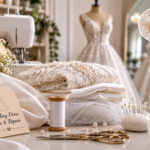
Even a beautiful wedding dress may require adjustments to achieve the right fit. Common alterations include shortening the hem, adjusting the waist, modifying the bodice and repairing loose seams or damaged fabric.
The type of material can affect how easily these changes can be completed. Delicate lace, fine tulle and layered designs may require more specialised handling than simpler garments.
If your wedding dress needs alterations or repairs, MK West Tailor provides clothing repair and alteration services in Milton Keynes. You can visit the website to learn more about services for different types of clothing and enquire about your specific requirements.
It is advisable to discuss any necessary adjustments well in advance, particularly if your dress contains delicate fabrics, intricate embellishments or multiple layers.
Find Your Ideal Wedding Dress at Tip Top Prom Dress
Choosing the right fabric is an important part of finding a wedding dress that reflects your personality and makes you feel confident. Whether you prefer the smooth finish of satin, the romantic detail of lace or the graceful movement of chiffon, understanding the characteristics of each material can help you make a more informed decision.
Explore the Tip Top Prom Dress store to browse the available dresses and find a design that suits your preferences. When comparing options, pay attention to the fabric description, fit, lining and construction to help you choose a dress that looks beautiful and feels comfortable.